
What is Moroccan Argan Oil Made From? Kernels, Nutrients and How to Spot the Real Thing
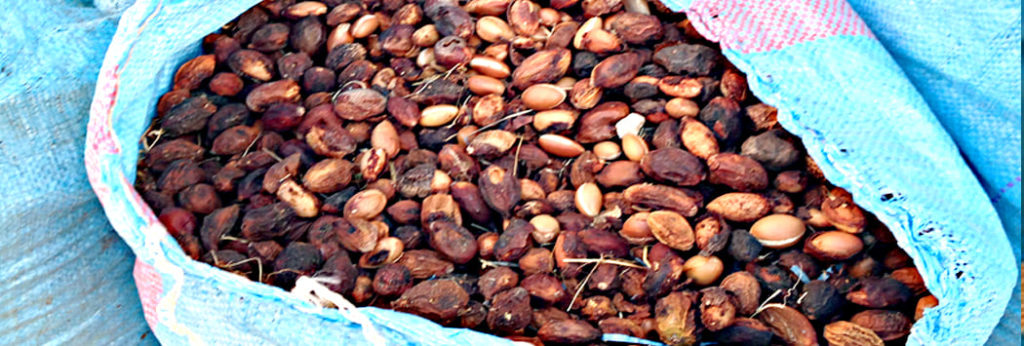
Moroccan argan oil is made from the oil-rich kernels found inside the hard nuts of the Argania spinosa tree — a species native only to the Souss Valley of south-west Morocco. Each nut contains up to three small white kernels, which are cold-pressed without heat or solvents to extract the pure oil. Nothing else is added.
From Tree to Kernel: How Moroccan Argan Oil is Made
Moroccan argan oil begins as the fruit of the Argania spinosa tree — a slow-growing, drought-resistant species found only in the UNESCO-protected Souss Valley of south-west Morocco, the sole region on Earth where it grows in any abundance. The entire production chain flows from this single, tightly defined origin.[0]
The fruits ripen during June and July, turning bright green or yellow and resembling an oval almond. Local communities harvest them directly from the branches. Contrary to the popular myth, reputable producers do not collect goat-grazed fruit — direct tree harvesting is standard practice for any certified, hygienic commercial oil.
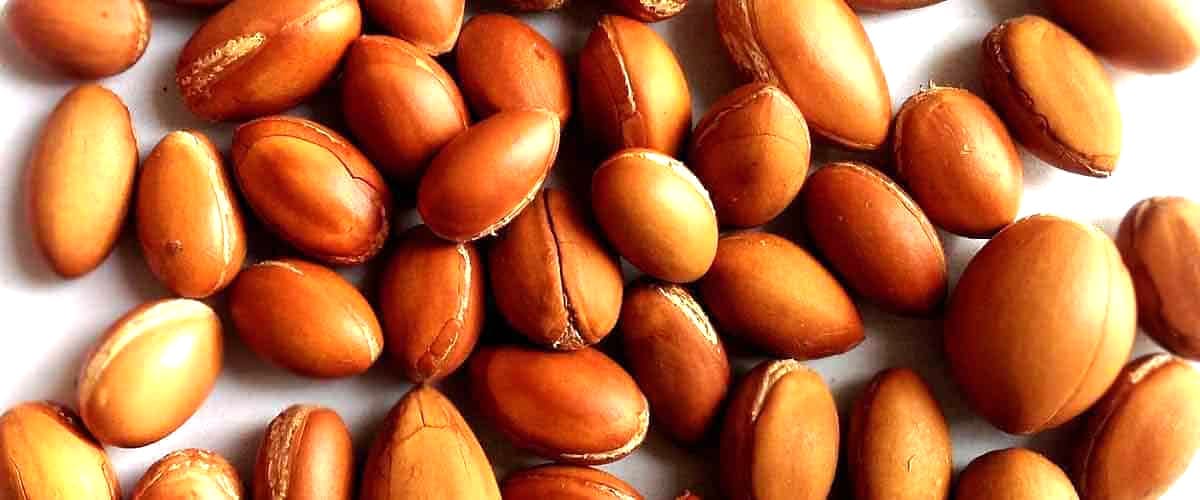
Inside the fruit’s thick outer peel lies a milky pulp, and within that pulp sits a hard-shelled nut. Each nut contains up to three oil-rich white kernels. Those kernels are the sole source of the finished oil — whatever extraction method follows, the process always begins here.
What is Argan Oil Made Of? Key Nutrients and Compounds
The finished oil is a complex blend of beneficial compounds, which explains its dual reputation across both skincare and nutrition.[1] Key components include:
- Tocopherols (Vitamin E): Argan oil contains approximately twice the Vitamin E of olive oil — a primary antioxidant that neutralises free radicals and helps protect skin from oxidative stress.
- Essential Fatty Acids: Rich in Omega-6 (linoleic acid) and Omega-9 (oleic acid), which support the skin barrier, cell membrane integrity, and cardiovascular health.
- Triterpenoids: Play an important role in skin healing and scar repair (cicatrisation).
- Beta Amyrine: May help stimulate cell growth and renewal.
- Butyrospermol: A powerful anti-inflammatory agent associated with reducing redness and skin irritation.
- Lupeol: Known for its antiseptic and antimicrobial properties.
These compounds work in combination — the fatty acids nourish and repair the skin barrier, the tocopherols neutralise free radicals, and the triterpenoids support healing at a cellular level. This is why the same oil is effective for skin applications, hair care, and as a dietary supplement — each use draws on a different facet of the same nutritional profile.
Cosmetic vs Culinary Grade: What is the Difference?
There are two distinct categories: cosmetic and culinary. Both are produced from cold-pressed kernels and share a broadly similar nutrient profile — the key difference lies in how the kernels are treated before pressing.
The cosmetic grade is made from raw, untoasted kernels. The single-filtered variety has a light golden hue and a faint natural scent; the double-filtered version is completely neutral in colour and odour, with a marginally richer omega fatty acid profile. Both are suitable for skin and hair use. For a full breakdown of topical applications, see our dedicated guides to argan oil for skin and argan oil for hair.
The culinary grade has a distinctive golden-brown colour and rich, nutty flavour, produced by gently toasting the kernels before pressing. Chefs use it for dipping bread, drizzling over salads, and cooking tagines. The toasting process alters the chemical composition, making culinary oil unsuitable for skin application. For recipes and serving ideas, see our culinary argan oil guide.
How Argan Oil is Extracted: Stone Pressing vs Cold Pressing
Argan oil is produced using one of two methods: traditional hand-pressing by Berber women using stone tools, or modern mechanical cold-pressing — the latter now standard for commercial production due to its superior consistency, lower water content, and longer shelf life.
Manual Stone Pressing
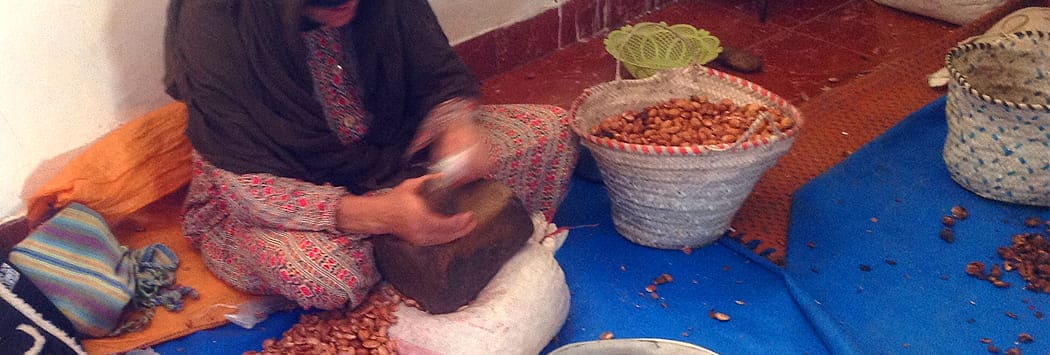
Historically, local Berber women performed the extraction entirely by hand. The hard shells are broken using stones, the kernels air-dried in clay containers, then ground and mixed with water to form a paste from which the oil is separated. It is labour-intensive: around 150 kg of raw fruit and approximately one week of work yields just 5 litres of oil.
Traditional hand-pressing is less common in commercial production today. The resulting oil tends to carry higher water content and sediment, which shortens shelf life. It remains culturally significant and is still practised within many Moroccan co-operatives.
Modern Mechanical Cold Pressing
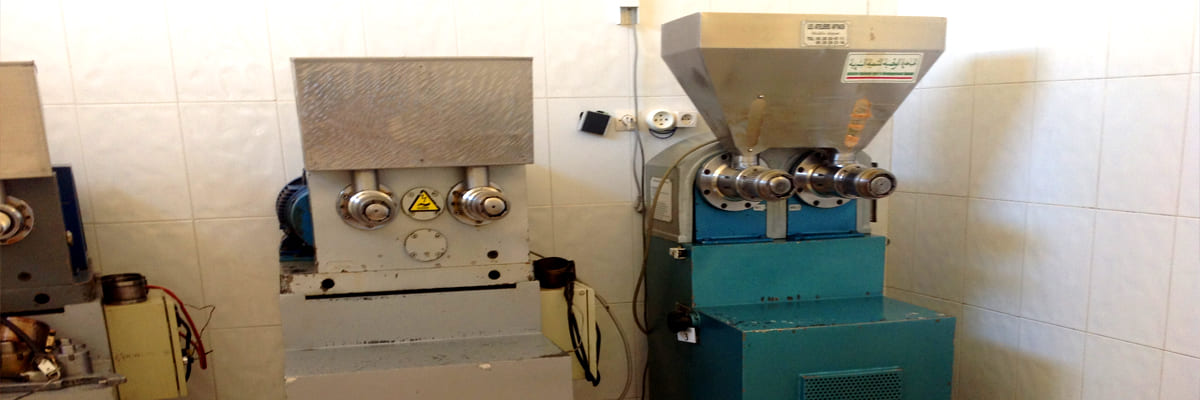
Increased global demand has enabled co-operatives to invest in modern mechanical presses. These cold-press the kernels efficiently without adding water, producing a cleaner, more stable output. Water content is significantly lower, which improves texture and shelf life, while the nutrient profile is fully preserved — the defining advantage of cold-pressing over heat-based extraction methods.
💡Top Tip: How to Tell if Argan Oil is Genuine and Pure
Pure cosmetic argan oil should be a clear light golden-yellow, absorb quickly without stickiness, and carry either a faint nutty scent (single-filtered) or no scent at all (double-filtered). Check the INCI ingredients label — it should read Argania Spinosa Kernel Oil as the sole ingredient, with confirmed single-origin Moroccan sourcing and organic certification. Any strong, rancid, or chemical smell, or a very dark or orange colour, indicates an adulterated product.
Argan Oil FAQs
Common questions about what Moroccan argan oil is made from, how its compounds work, and how to use and identify a genuine product.
What is Moroccan argan oil made from?
Moroccan argan oil is made from the kernels found inside the hard nuts of the Argania spinosa tree, which grows exclusively in the Souss Valley of south-west Morocco. Each nut contains up to three small oil-rich kernels that are cold-pressed — raw for cosmetic grade, or gently toasted for culinary grade — to extract the pure oil.
What is the difference between argan oil and Moroccan argan oil?
There is no botanical difference — all genuine argan oil is Moroccan, because Argania spinosa grows only in Morocco. The term “Moroccan argan oil” is simply a marketing qualifier that emphasises origin. If a product claims to be argan oil but cannot confirm Moroccan single-origin sourcing, treat that as a red flag for adulteration or mislabelling.
Is argan oil good or bad for you?
Pure argan oil is widely regarded as beneficial for both topical and internal use. Its Vitamin E content, essential fatty acids, and anti-inflammatory compounds support skin hydration, barrier repair, and healthy ageing. It is well-tolerated by most skin types including sensitive and acne-prone skin. For internal use, see our guide to argan oil capsules.
Is it okay to put argan oil on your face?
Yes — cosmetic-grade argan oil is non-comedogenic and suitable for daily facial use as a moisturiser, serum booster, or overnight treatment. It absorbs quickly without leaving a greasy residue. Always use cosmetic-grade (raw, untoasted) oil on the face — culinary grade is toasted and is not intended for skin application. See our full argan oil for skin guide.
Which is better for wrinkles — castor oil or argan oil?
For facial wrinkles, argan oil is generally the better choice. It is significantly lighter than castor oil, absorbs without blocking pores, and its Vitamin E and fatty acid content directly supports collagen and skin elasticity. Castor oil is better suited to targeted treatments such as brows and lashes rather than all-over facial use.
How can I tell if argan oil is real or fake?
Pure cosmetic argan oil is clear, light golden-yellow, and absorbs readily into skin. It carries either a faint nutty scent (single-filtered) or none at all (double-filtered). Check the INCI label for Argania Spinosa Kernel Oil as the sole ingredient, and look for certified organic and single-origin Moroccan sourcing. See the Top Tip section above for a full checklist.
What is special about Moroccan argan oil?
Its uniqueness comes from both geography and composition. Argania spinosa grows nowhere else on Earth in commercial quantities, making authentic argan oil an inherently scarce, single-origin ingredient. Nutritionally, it offers an unusually high Vitamin E concentration, a favourable Omega-6 to Omega-9 ratio, and a suite of triterpenoids and anti-inflammatory compounds not commonly found together in a single plant oil.
Where to Buy Authentic Organic Argan Oil
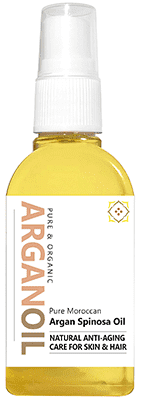
Pure double filtered Organic Argan Oil for a lighter Argan scent.
- ✓ 100% Pure Oil — No carrier oil blends
- ✓ Handmade in Morocco — Traditional Berber extraction
- ✓ Certified Authentic — USDA, CCPB & ONSSA certified
- Free USPS 7-9 Day Tracked Shipping to U.S. Price includes U.S. import taxes.
We offer two grades of genuine, pure, extra virgin cold-pressed organic argan oil — both single-origin Moroccan and certified organic.
Our Naturally Scented option undergoes single filtration, retaining the natural nutty aroma. Our Double-Filtered cosmetic grade removes all sediment and lowers water content for a completely neutral scent — the preferred choice for anti-ageing and sensitive skin use.