


Argan Oil & Prickly Pear Cactus Seed Oil for Hyperpigmentation & Melasma: Does It Work, Which Skin Types Benefit Most, and How to Use It
Argan oil and prickly pear cactus seed oil (PPSO) inhibit the enzymes that produce melanin — but their most overlooked benefit is what they do after you use a lightening active. Actives like alpha arbutin and bearberry work, but they irritate the skin; that irritation triggers fresh melanin production, so faded marks return. Applying argan oil or PPSO immediately after your active suppresses that inflammatory signal, locking in results. Both are non-comedogenic (rating: 0) and safe for all skin types.

Using argan oil for dark spots and hyperpigmentation is a time-tested Moroccan tradition now supported by early laboratory research. In Morocco, pure argan oil has long been valued for its gentle, natural effect on uneven skin tone — moisturising, calming inflammation, and helping fade dark marks for a clearer complexion.
But how does the science actually hold up? And how should it be used for best results?
Shop Pure Cosmetic Argan Oil ⯈
Does Argan Oil Actually Treat Hyperpigmentation?
Research suggests argan oil may reduce melanin production by inhibiting the TYR and DCT enzymes responsible for pigment synthesis — providing a plausible biological mechanism for its traditional use on dark marks and uneven skin tone. However, it is important to understand that the supporting evidence is currently from laboratory studies rather than large-scale human clinical trials.
In 2013, a peer-reviewed study on argan oil and melanin biosynthesis found that argan oil applied to melanoma cells produced a dose-dependent decrease in melanin production.[0] The researchers identified that argan oil appears to interfere with the conversion of TYR and DCT enzymes — the key enzymes that synthesise melanin in the skin.
Argan oil is also not a targeted pharmaceutical treatment in the way that niacinamide, retinoids, or hydroquinone are. It works on two complementary fronts: reducing the enzymatic trigger for melanin, and calming the skin inflammation that causes post-inflammatory dark marks to form in the first place. Used consistently as part of a dual approach with proven actives, the evidence suggests it can make a meaningful contribution to improving uneven skin tone over time.
A common claim in search results frames argan oil purely as a “nourishing oil” that prevents spots but cannot correct existing ones. This undersells what the research actually shows. The 2013 enzymatic inhibition study demonstrates a direct biological mechanism for melanin reduction — not just barrier support. The more accurate framing is this: argan oil is not a standalone bleaching agent, but it is not merely a moisturiser either. It inhibits melanin synthesis at enzyme level, suppresses the inflammatory signals that trigger fresh pigmentation, and — critically — protects the results that clinical actives create. Used in a structured dual-layer routine, it is an active participant in the fading process, not a passive carrier.
What Causes Dark Spots — and How Argan Oil Addresses Each Trigger
Hyperpigmentation is caused by an overproduction of melanin — triggered by UV exposure, hormonal changes, skin inflammation, or physical damage. Argan oil’s anti-inflammatory compounds, fatty acid profile, and enzymatic activity make it directly relevant to several of these triggers, not just one.
Melanin production is governed by several body systems:
The Endocrine System
Responsible for hormone-driven melasma — often called the “mask of pregnancy” but also triggered by contraceptives and stress hormones. Avoiding unnecessary hormonal fluctuations and supporting skin barrier health during hormonal events reduces risk. Argan oil cannot address hormonal root causes directly, but its anti-inflammatory action helps moderate the skin’s melanin response to those hormonal shifts.
Acne and Post-Inflammatory Hyperpigmentation (PIH)
Acne is one of the single biggest causes of lasting dark marks. When a breakout becomes inflamed, surrounding skin responds by producing excess melanin as part of the healing process — and interference (picking, squeezing) deepens the resulting mark significantly. We cover this in detail in our guide to argan oil for acne-prone skin, including how argan oil’s linoleic acid corrects the sebum imbalance that drives cystic breakouts, and how its comedogenic rating of 0 makes it one of the safest actives for both PIH prevention and fading.
The Inflammatory Response — Including Candida
Research shows that Candida albicans overgrowth can directly stimulate melanocytes inducing localised hyperpigmentation as part of the skin’s innate immune response.[10] If you’re experiencing persistent dark patches alongside other unexplained skin changes, candida may be an overlooked root cause — see our article on Candida and skin problems. Argan oil’s polyphenols and vitamin E can still help calm the inflammatory signal at skin level, regardless of the underlying trigger.
Skin Microbiome Disruption
When the microbiome is disturbed — by harsh cleansers, antibiotics, or over-exfoliation — the resulting dysbiosis promotes chronic low-grade inflammation that keeps melanocytes overactive. Supporting microbial diversity through gentle skincare and probiotics is an underused prevention strategy. Read more about the skin microbiome and pigmentation. Argan oil supports this balance through its gentle, non-stripping fatty acid profile — it moisturises without disrupting the skin’s natural microbial environment.
Cosmetic Treatments Gone Wrong
Microdermabrasion, chemical peels, and laser therapies can all risk triggering or worsening hyperpigmentation if performed incorrectly, too aggressively, or on unprepared skin. The risk is highest in darker skin tones, where inflammatory trauma from the treatment itself sparks PIH. Again, following up with a pure cactus seed oil or argan oil’s moisturiser which is non-comedogenic and anti-inflammatory is one of the safest natural post-procedure recovery oils to suppress the inflammatory cascade that can lead to post-treatment dark marks.
UV Exposure
Sunlight directly stimulates melanocytes — and critically, it darkens existing marks and reverses all fading progress. Daily SPF 30–50 is non-negotiable for anyone treating hyperpigmentation, year-round and on overcast days. No topical active can outwork unprotected sun exposure. Argan oil’s vitamin E and ferulic acid provide antioxidant support against UV-induced free radical damage, but they are not a substitute for SPF — they work alongside it.
The Central Nervous System
Chronic stress is linked to inflammatory skin responses including melanin overproduction via the brain-skin axis.[1] Argan oil cannot resolve chronic stress, but its anti-inflammatory compounds help moderate the skin’s downstream response — reducing the severity of stress-triggered melanin events.
Argan oil is particularly relevant to the inflammatory pathway across all these triggers. Its linoleic acid improves sebum composition to reduce the deep, cystic breakouts most likely to leave lasting dark marks, while its polyphenols and vitamin E work to calm irritation before it signals excess melanin production. It also has a comedogenic rating of 0 — meaning it treats pigmentation without risking new breakouts.[2]
If you have medium to deep skin tones — common among people of East Asian, South Asian, Middle Eastern, African, Afro-Caribbean, or Latin American descent — your skin’s higher melanin content makes hyperpigmentation more intense and longer-lasting than in lighter skin types. Even minor inflammation acts as a pigment trigger, leaving dark marks that can persist for months or years after a blemish heals. For these skin types, prevention is as important as treatment: stopping the inflammatory trigger before it fires is more effective than trying to fade established marks. Argan oil’s anti-inflammatory and barrier-supporting properties make it especially relevant here — applied consistently, it may help reduce the frequency and severity of PIH-triggering inflammation.
Which Oil Is Best for Removing Hyperpigmentation?
No single oil removes hyperpigmentation on its own — but among carrier oils, argan oil and prickly pear cactus seed oil are among the most evidence-supported for reducing the inflammation and oxidative stress that drives dark mark formation, making them strong complementary ingredients to clinically proven pigment actives.
It is worth understanding the difference between carrier oils and essential oils in the context of hyperpigmentation claims. Essential oils — lavender, frankincense, geranium — are volatile, highly concentrated aromatic extracts. While some laboratory studies show they can inhibit tyrosinase in isolated cell cultures, there is currently no robust clinical evidence that they fade dark marks on human skin. They also carry a risk of irritation and phototoxicity that can actively worsen pigmentation.
Carrier oils like argan are different. They are applied undiluted to the skin in their whole form, and their fatty acid and micronutrient profiles are well-documented. Of the carrier oils most commonly used for hyperpigmentation:
- Argan oil: Inhibits melanin enzymes in vitro, reduces inflammation, non-comedogenic (rating: 0). Strong evidence base relative to other carrier oils.[0]
- Prickly pear cactus seed oil (PPSO): Exceptionally high vitamin E content (up to 150% more than argan oil) and high linoleic acid give it outstanding anti-inflammatory and antioxidant activity. This makes PPSO particularly effective at calming the skin irritation caused by lightening actives — a critical role, since that irritation is precisely what re-triggers melanin production and causes dark marks to return. Emerging evidence suggests it may also improve skin tone and radiance directly in hyperpigmented skin. Comedogenic rating: 0–1.
- Rosehip oil: Contains naturally occurring retinoids (vitamin A derivatives) which support cell turnover. A reasonable addition but can be comedogenic for some skin types.
For active pigmentation fading, dermatologists consistently prioritise niacinamide, alpha arbutin, vitamin C, azelaic acid, and retinoids — all of which have robust human clinical trial evidence. Carrier oils work best in a supporting role: calming inflammation, repairing barrier function, and sealing in the actives.
💡 Top Tip: Always Use SPF — Or Nothing Else Will Work
Sunscreen is not optional when treating hyperpigmentation — it is the single most important step in any dark mark routine. UV exposure directly stimulates melanocytes, and even brief daily sun exposure will re-darken marks faster than any oil or serum can fade them. Apply a broad-spectrum SPF 30–50 every morning, after your argan oil step, and reapply if spending time outdoors. Without it, argan oil, niacinamide, and every other ingredient in your routine will be working against the clock.
How to Fade Hyperpigmentation Fast: The Dual-Layer Approach
The most effective approach to fading hyperpigmentation combines a clinically proven pigment-correcting active (such as niacinamide or alpha arbutin) with a barrier-supporting, anti-inflammatory carrier oil — applied in layers, with the active going on first and the oil sealing it in. Used consistently with daily SPF, visible improvement in dark marks typically occurs within 4–8 weeks.
Step 1: Pigment-Correcting Active (Applied First to Clean Skin)
Niacinamide and alpha arbutin are the most accessible and well-tolerated clinical options for reducing melanin transfer and tyrosinase activity.[4][5] Unlike essential oils, these ingredients have documented human clinical trial evidence for visibly improving uneven skin tone. Note that these actives can cause mild skin irritation in some users — which is precisely why the oil step that follows is not optional.
Recommended formulations:
- The Ordinary Niacinamide 10% + Zinc 1%
- The Ordinary Alpha Arbutin 2% + HA
- The Inkey List Niacinamide Serum
Apply 2–3 drops to clean, dry skin and allow to absorb before the oil step.
Step 2: Argan and Prickly Pear Oil Blend (Anti-Inflammation and Barrier Layer)
Follow the active immediately with a carrier oil blend. This step does more than moisturise: it suppresses the inflammation triggered by the active above, cutting off the signal that would otherwise restart melanin production and cause faded marks to return. It also supports skin healing and barrier repair over time.[6]
Recommended Blend
60ml Pure Cosmetic Argan Oil
5ml Prickly Pear Cactus Seed Oil
Optional low-irritation additions:
2–3 drops chamomile extract (soothing)
2–3 drops rose oil (barrier support)
Why this works
- Argan oil: Rich in linoleic acid and tocopherols to reduce inflammation and support barrier repair. Its own melanin-inhibiting properties add a second layer of pigmentation control.[3]
- Prickly pear cactus seed oil: Exceptionally high in vitamin E and anti-inflammatory antioxidants — among the richest of any botanical oil. Its primary role in this blend is to actively calm the skin irritation caused by lightening actives, preventing the inflammation–melanin cycle that brings dark marks back. It also supports skin regeneration and visible tone improvement directly.
What to Avoid
- Lemon, lime, or citrus essential oils: Phototoxic — they react with UV light and can actively worsen pigmentation.
- Cinnamon or clove oil: High irritation risk — can trigger the inflammatory response that causes PIH.
- High concentrations of any essential oil on the face: Irritation leads to inflammation which leads to more dark marks.
Full Routine
- Cleanse skin
- Apply pigment-correcting active serum (niacinamide or alpha arbutin)
- Apply 2–3 drops of argan and prickly pear oil blend — suppresses inflammation from the active and reinforces melanin inhibition
- Apply broad-spectrum SPF 30–50 (morning only — non-negotiable)
Results timeline: With consistent use, visible improvement typically occurs within 4–8 weeks depending on skin type and depth of pigmentation. Deep melasma and long-standing PIH in darker skin tones may take longer.
💡 Top Lightening Success Tip: Why Oil Stops Marks Coming Back
Here is something most lightening guides overlook. Clinically proven actives like alpha arbutin and bearberry-derived compounds are effective at fading dark marks — but they can also irritate the skin barrier. That irritation triggers an inflammatory response, and inflammation is itself one of the primary signals for melanin production. The result: the marks you just faded are gradually re-triggered by the very product that removed them.
Applying argan oil or prickly pear cactus seed oil immediately after your lightening active addresses this directly. Both oils suppress skin inflammation through their polyphenols, tocopherols, and high linoleic acid content — calming the irritation before it can signal fresh melanin production. Combined with argan oil’s own melanin-inhibiting properties, this means the oil layer is doing two jobs at once: protecting the results your active just created, and actively reinforcing them. This dual action — lightening active first, anti-inflammatory oil second — is why consistent use of this two-step sequence produces more durable results than using actives alone.
“Unregulated Imported Fade Creams”: Why Caution is Necessary
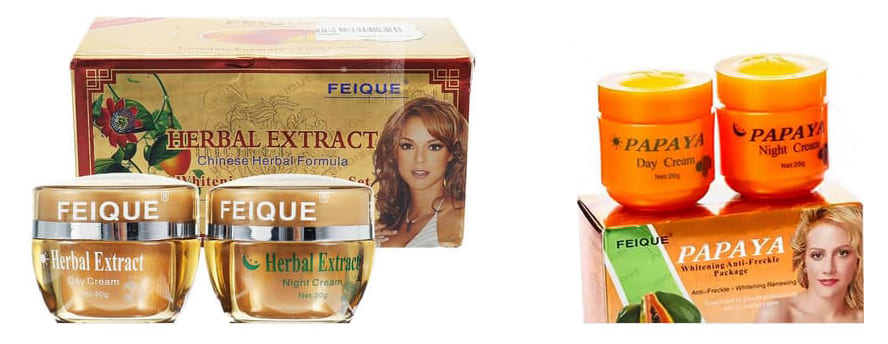
If you are looking for an effective fade cream for dark spots or hyperpigmentation, it is vital to distinguish between regulated clinical treatments and unregulated imported fade creams; while the former are formulated for safety and efficacy, many unregulated products found online are manufactured outside of Western regulatory frameworks.[8]
Why Regulatory Oversight Matters
Many unregulated fade creams found in online marketplaces promise significant skin lightening or dark spot correction in a matter of days. While traditional herbal formulas can offer genuine benefits, products sourced from markets without strict regulatory oversight often lack the necessary ingredient transparency.
Products that promise dramatic results within 3 to 7 days frequently signal the presence of hidden, potentially hazardous substances — such as mercury or steroids — that are not permitted in Western-regulated cosmetics.[8][9]
Understanding Potency vs. Safety
We receive frequent feedback on the rapid results promised by certain unregulated brightening creams. While some users report that specific formulations do successfully lift pigment, the rapid rate at which these products work often causes the skin to cycle prematurely, leading to thinning or peeling. We strongly advise against using products that promise “miracle” results in under two weeks, as these effects are often driven by inflammatory processes that damage the skin barrier.
If you have already used a product that resulted in irritation or peeling, your priority must be barrier repair. Applying soothing, anti-inflammatory agents like prickly pear cactus seed oil or pure argan oil is a standard recommendation to help calm the skin and prevent the inevitable “rebound darkening” that occurs when an inflamed skin barrier tries to overcompensate with excess melanin production.
A Note on Ingredients: If you are researching brightening ingredients, look for transparency. Compounds like alpha-arbutin (naturally found in bearberry/Arctostaphylos uva-ursi) are clinically documented and widely regulated. If a product labels itself as “herbal” but does not disclose its active brightening mechanism — or if it is not sourced from a transparent, traceable supply chain — it is safest to treat it with extreme caution.
Can I Apply Argan Oil Directly to My Face?
Yes — pure cosmetic argan oil can be applied directly to the face and is safe for daily use on all skin types, including oily and acne-prone skin, thanks to its comedogenic rating of 0. For hyperpigmentation specifically, applying it after a niacinamide or alpha arbutin serum gives the best results: the oil suppresses the inflammation those actives can cause, cutting off the signal that would otherwise re-trigger melanin production and bring dark marks back.
How to Apply Argan Oil Correctly for Hyperpigmentation
- How much: 2–3 drops is sufficient for the full face — argan oil is lightweight and spreads easily
- When: Evening routine, after actives. Morning routine, before SPF.
- Before or after moisturiser: Apply argan oil after water-based serums (like niacinamide) but before a heavy cream moisturiser if using one. As a light oil, it can also replace a moisturiser for normal to oily skin types.
- How many times: Once or twice daily. Twice daily is fine for dry or combination skin; once daily (evening) is sufficient for very oily skin types.
- Do dermatologists recommend argan oil: Argan oil is generally well-regarded by dermatologists as a safe, non-comedogenic carrier oil, though it is not a prescription treatment. It is most often recommended as a complementary ingredient alongside proven actives rather than as a standalone pigmentation treatment.
Hyperpigmentation FAQs
Argan oil is one of the most searched natural options for hyperpigmentation, dark spots, and uneven skin tone. Below are direct answers to the most common questions, drawn from clinical research and traditional use.
Does argan oil treat hyperpigmentation?
Research suggests argan oil may help reduce hyperpigmentation by inhibiting the TYR and DCT enzymes that produce melanin, and by reducing the skin inflammation that triggers post-inflammatory dark marks.[0] The current evidence is from laboratory studies rather than large human clinical trials, so it is most accurately described as a supportive ingredient rather than a standalone treatment. It works best combined with niacinamide or alpha arbutin.
Which carrier oil is best for hyperpigmentation?
Among carrier oils, argan oil has the strongest published evidence for directly inhibiting melanin production — its polyphenols and fatty acids interfere with the TYR and DCT enzymes responsible for pigment synthesis.[0] Prickly pear cactus seed oil is the strongest complementary choice, with exceptionally high vitamin E content that suppresses the inflammation driving dark mark formation. Used together — argan oil as the melanin inhibitor, PPSO as the anti-inflammatory barrier layer — they address hyperpigmentation on two fronts simultaneously. Rosehip oil is a reasonable third option for its retinoid content, though it can be comedogenic for some skin types.
What fades dark spots the fastest?
The fastest reliable approach combines a clinically proven active — niacinamide, alpha arbutin, azelaic acid, or vitamin C — with an anti-inflammatory carrier oil applied immediately after. The active fades existing melanin; the oil prevents the inflammatory rebound that brings marks back. With daily SPF applied over both, visible improvement is typically seen within 4–8 weeks. Without SPF, no ingredient combination will produce lasting results — UV exposure re-darkens faded marks faster than any active can fade them. Argan oil alone is not the fastest approach, but as part of this structured routine it accelerates and sustains results significantly.
Can argan oil lighten the skin?
Argan oil is not a skin bleach and will not lighten your natural skin tone. What it may do is help improve the appearance of uneven skin tone and dark marks over time by reducing melanin overproduction in affected areas. The distinction matters: it targets abnormal pigmentation rather than overall complexion.
Does argan oil increase melanin?
No — laboratory research suggests the opposite. Argan oil appears to inhibit the enzymes (TYR and DCT) that convert precursors into melanin, producing a dose-dependent reduction in melanin in treated cells.[0]
Is argan oil safe for melasma?
Yes, argan oil is considered safe for melasma-prone skin. It does not contain ingredients known to trigger or worsen melasma, and its anti-inflammatory properties may help reduce one of melasma’s key triggers. However, melasma driven by hormonal factors (contraceptives, pregnancy) requires medical advice alongside any topical routine — and daily SPF is essential.
Can argan oil fade scars?
Argan oil may help improve the appearance of post-inflammatory marks and superficial scars over time through its anti-inflammatory and barrier-repair properties. It is more effective on recent marks than established, deep scarring. For acne scars with significant texture change, clinical treatments (microneedling, chemical peels, retinoids) are more effective.
Which oil is best for removing hyperpigmentation?
Among carrier oils, argan oil and prickly pear cactus seed oil have the strongest evidence base for supporting skin tone improvement. PPSO is particularly valuable for its exceptional anti-inflammatory activity, which helps prevent the inflammation-driven melanin cycle that causes faded marks to return. No carrier oil removes established hyperpigmentation on its own — for active fading, niacinamide, alpha arbutin, vitamin C, and azelaic acid have far stronger clinical evidence. The most effective approach uses both: proven actives first, then argan or prickly pear oil to protect, seal, and sustain the results.
Why do my dark marks keep coming back after treatment?
One of the most common reasons faded dark marks return is that the lightening actives used to treat them — including alpha arbutin and bearberry-derived compounds — can irritate the skin barrier. That irritation triggers an inflammatory response, and inflammation is itself a primary driver of melanin production. Applying argan oil or prickly pear cactus seed oil immediately after your lightening step suppresses this inflammation before it can re-trigger pigmentation, helping faded marks stay faded for longer.
Is argan oil specifically better for dark skin tones?
Argan oil is safe and beneficial for all skin tones, but its anti-inflammatory properties make it particularly relevant for darker skin tones (Fitzpatrick Types III–VI), where post-inflammatory hyperpigmentation is more intense and longer-lasting. Preventing inflammation before it starts is critical for melanin-rich skin — and argan oil’s polyphenols and linoleic acid work directly on that prevention pathway.
Can I use argan oil on oily or acne-prone skin?
Yes. Argan oil has a comedogenic rating of 0, meaning it will not clog pores. Its antiseptic properties may also help reduce breakout frequency — which in turn reduces the post-inflammatory dark marks that acne leaves behind.[2]
Do I apply argan oil before or after moisturiser?
Apply argan oil after water-based serums (such as niacinamide) and before any heavy cream moisturiser. For normal to oily skin, argan oil can replace a separate moisturiser entirely. Always follow with SPF in the morning.
What are the disadvantages of argan oil for hyperpigmentation?
The main limitation is that argan oil is not a targeted pigment corrector in the way that niacinamide, retinoids, or hydroquinone are. On its own, without clinical actives and daily SPF, results will be slow and modest. It is also a premium oil — pure, cooperative-produced argan oil has a real cost of production, and very cheap products are likely diluted or adulterated.
Shop Authentic Argan & Prickly Pear Cactus Seed Oil ⯈