
Argan Tanning Oil: The Benefits of Argan Oil & Natural Oils for Tanning Safer
Argan oil is the base for our “Sahara Tanning Serum”. It is a blend of Coconut Oil, Kukui Nut Oil and Black Seed Oils. Used appropriately this combination helps develop a richer colour, rapidly that lasts longer. Simply massaged on these natural oils work together and lock in moisture during sun exposure leaving your skin feeling super-soft, feeling healthy and not dry. This super-absorbant serum leaves virtually no oily film.

The natural facial oil helped protect the skin from both ageing and sunburn caused by sunlight. It reduced harmful skin damage, lessened redness after UV exposure, and in most people it also reduced the number of damaged skin cells caused by the sun.
It’s worth noting that this does not mean the oil is a substitute for sunscreen.
The Use of Natural Oils in The Sun
A very interesting clinical study found that regular use of a nature-based botanical facial oil helped protect the skin from sun-related damage.[7]
After daily application, the oil significantly reduced oxidative stress caused by UVA rays, demonstrating strong antioxidant activity. It also reduced redness following UVB exposure and decreased the formation of sun-damaged skin cells in around two-thirds of participants.
The study suggests that antioxidant-rich botanical oils can help support healthier skin, reduce the effects of sun exposure, and promote a more even, longer-lasting tan.
Does Argan Oil Help You Tan?
Argan oil for tanning works by keeping skin hydrated and calm so any tan you do get develops more evenly and lasts longer without flaking.
A key way to slow visible skin ageing and reduce oxidative damage is to keep up a good supply of antioxidants. UV exposure causes free-radical damage (oxidative stress), which affects how well skin cells regenerate and is one of the main drivers of skin cancer. Antioxidants — whether from diet or applied topically — help counter that damage.
Argan oil contains a naturally high vitamin E (tocopherol) content for a plant oil, with gamma-tocopherol making up the largest share of that vitamin E profile. Argan oil also contains flavonoids, plant compounds that may help reduce the pro-inflammatory activity linked to free-radical production. They’re most studied as part of the diet, but are also used topically in skincare.
Which Oils Give You the Deepest Tan?
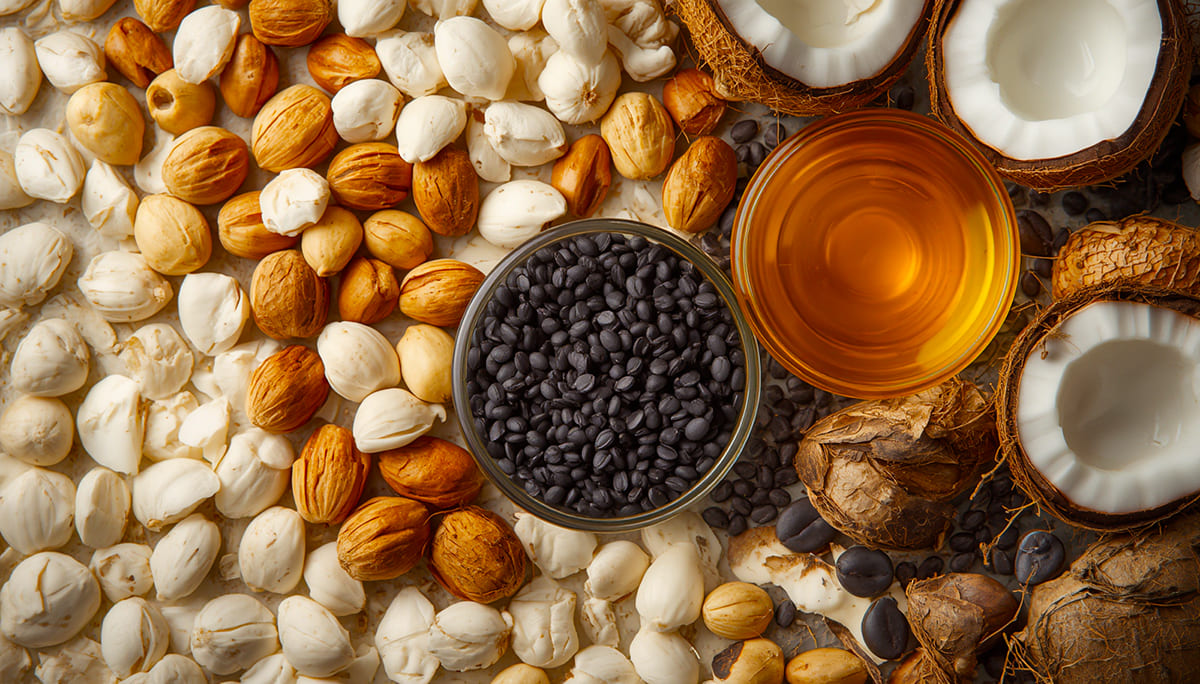
This blend combines four carefully selected oils in fixed proportions — Argan, Coconut, Kukui Seed Oil and Black Seed oil — each chosen for a specific skin benefit when tanning.
Argan Oil
Argan oil forms the lightweight base of this blend, supplying vitamin E and fatty acids that Calms inflammation/redness and supports the barrier depleted by dehydration.
Skin & Sun Benefit: Helps skin retain moisture and recover more comfortably after UV exposure, thanks to its vitamin E content.
Coconut Oil
Coconut oil is the classic bronzing ingredient in this blend, valued for fatty acids such as capric, caprylic, and lauric acid that nourish skin and help a tan hold its colour once it develops. It also has antimicrobial and anti-fungal properties that help guard skin against infection.
It’s included at this level partly for texture: coconut oil gives the serum its spreadability. It’s also a strong occlusive oil, forming a light layer on the skin that slows trans-epidermal water loss — useful when skin is already prone to drying out.
Skin & Sun Benefit: Its stable saturated fats and occlusive properties slow moisture loss, so skin feels less tight and dry after sun exposure.
Kukui Nut Oil
Kukui ( Aleurites moluccana )— also known as candlenut — arrived in Hawaii with Polynesian voyagers over a thousand years ago, and traditionally every part of the tree was put to use. That same nut oil carries a long-standing reputation for use on sun- and wind-exposed skin, and research has looked at its wound-healing potential.[5] Hawaiians have long used it to soothe burns and skin irritation. It targets the specific physiological damage caused by UV rays. It has a chemical structure that allows it to treat the deeper effects of thermal and radiation injury.
Kukui oil is notably light for a plant oil, thanks to a high linoleic acid content, which lets it absorb quickly rather than sitting on the surface of the skin — one reason tanning oils use it instead of heavier bases. It also contains vitamins A and E, which contribute to supporting the skin’s lipid barrier and help reduce moisture loss after sun exposure.
Skin & Sun Benefit: Absorbs quickly without feeling greasy, while helping calm and moisturise skin that’s had a lot of sun. It is also widely recognised in Hawaiian culture as a treatment for minor burns and irritation. For sunburn specifically.
Black Seed Oil
Black seed oil (Nigella sativa) rounds out the blend, adding depth of colour, thicker texture and extra exotic natural fragrance. It is well known for its own antioxidant compounds, including thymoquinone.
Thymoquinone is a well-studied anti-inflammatory compound, and sun-exposed skin is often in a mild inflammatory state — some redness, some heat — so black seed oil is included partly to help calm that. It’s also rich in essential fatty acids and antioxidants that support the skin’s lipid barrier and help it hold onto moisture, and may help offset some of the free-radical activity that UV exposure causes.
Beyond its many skin benefits, it’s also what gives this blend its rich, colour and thicker texture that along with KuKui oil lets it absorb leaving almost no oily appearance and a super-hydrated feel.
Skin & Sun Benefit: Its thymoquinone content may help calm sun-stressed skin, while its fatty acids support the moisture barrier so skin feels less dry once you’re out of the sun.
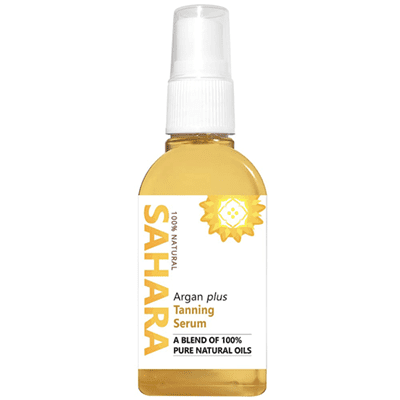
A blend of Moroccan Argan Oil plus three exotic oils to utan and condition skin while sunbathing
- ✓ 100% Pure Oil — No carrier oil blends
- ✓ Handmade in Morocco — Traditional Berber extraction
- ✓ Certified Authentic — USDA, CCPB & ONSSA certified
- Free USPS 7-9 Day Tracked Shipping to U.S. Price includes U.S. import taxes.
💡 Top Tip: Boost Your Skin Protection in Strong Sun
Always apply an overnight, after-sun treatment after a lot of sun exposure. A few drops of pure Argan Oil or Prickly Pear Cactus Seed Oil work overnight helping to calm inflammation, support healing of existing marks, maintain hydration, and support the skin’s natural renewal process.
How to Take Care of Your Skin in the Sun
Skin exposed to UV rays ages faster and faces a higher lifetime risk of skin cancer, so protecting it — not just tanning it — should always come first.
Skin Ageing & Tanning
The sun is perhaps the single greatest cause of premature ageing of the skin and hair. Natural UV radiation levels are increasing, and combined with the ongoing trend for a deep tan, that’s a recipe for accelerated skin ageing.
Why Do We Tan?
To protect your skin from sun damage, your body tans. Tanning is a darkening of the skin caused by a pigment called melanin. Darker melanin helps protect skin from UV damage by reducing how far UV rays penetrate. The darkening process and melanin formation is triggered by UV radiation from the sun — not by any oil applied to the skin.
High Risks of Skin Cancer
The single greatest cause of skin cancer is sunburn. The highest rates of melanoma occur in non-indigenous, white-skinned populations in countries such as New Zealand and Australia.
Sunburn has long-lasting effects, and more than five sunburn events in a lifetime drastically increase the risk of skin cancer later on. This is why protecting children from sunburn is particularly important.
Diet and Skin Cancer
The hotter countries of southern Europe are also at higher risk of skin cancer overall. However, countries such as Spain and Greece have comparatively lower skin cancer rates, which researchers associate with the Mediterranean diet — high in fish, fresh fruit, and olive oil, and lower in red meat.
By contrast, high-risk countries such as the USA, Australia, and New Zealand have cuisines that feature more red meat and dairy.
Sun Screens — Good or Bad?
Sunscreen, sunblock, sun cream, and suntan lotions all work to reduce the amount of harmful UVA and UVB radiation reaching your skin.
Despite decades of education about sunscreen use, skin cancer rates continue to rise. Some early sunblock formulas only blocked UVB rays, which confused the body’s natural defence signals and let harmful UVA damage through unchecked. Modern sunscreens should always offer both UVA and UVB protection.
Retinyl Palmitate?
Research from the Environmental Working Group, a Washington-based non-profit, suggests some sunscreen ingredients may be associated with faster formation of cancer cells under certain conditions.
The U.S. Food and Drug Administration has studied retinyl palmitate for photo-toxicity and photo-carcinogenicity, but says there isn’t currently enough evidence to confirm harm.
In Canada, health authorities have raised concerns that such additives may increase sun sensitivity and have proposed warning labels for sunscreens containing retinyl palmitate.
Other common ingredients — PABA (para-aminobenzoic acid) and benzophenones — are reported to cause skin irritation and allergic reactions in some people, and are suspected of increasing free-radical production in sunlight, which may accelerate skin ageing.[4]
Argan Tanning Oil FAQs
Quick, direct answers to the questions people most often ask about using argan oil and this tanning blend in the sun.
Are natural oils good to use for tanning?
Yes, natural oils like those in our Sahara serum don’t exactly make skin tan faster, although natural oils can focus but give a deeper tan and better colour more quickly with less redness.
Does Sahra Tanning Oil have SPF or sun protection?
No. Pure argan oil, like most oils, have an SPF of roughly 1 or lower and shouldn’t be relied on for sun protection. Apply a proper broad-spectrum sunscreen first and let it absorb, then use this oil on top — or afterwards, as an after-sun moisturiser and tan-extender.
Does argan oil make you tan faster?
No oil, including argan oil, speeds up melanin production — that’s driven entirely by UV exposure. What argan oil can do is help skin hold onto its tan for longer by reducing moisture loss and flaking. The tan appears deeper quicker due to the improved colour.
What is the disadvantage of argan oil for tanning?
Its main limitation is that it offers no meaningful SPF, so it can create a false sense of protection if used instead of sunscreen. People with tree nut allergies should also patch-test before wider use.
Is it safe to use tanning oil serums every day?
Generally yes, for most skin types, since it’s a natural moisturising oil rather than an active treatment. Our Sahara formulas is specifically formulated with KuKui nut oils for its exceptional properties for fighting UV damage deep within the skin[5]. If you have nut or seed allergies, do a small patch test first.
Can I use this tanning oil on my face?
You can, in small amounts, but facial skin is more sensitive and more prone to sun damage — always apply sunscreen underneath rather than relying on the oil alone.